
Arabic grammar, often best learned with a PDF resource, unlocks the language’s structure, aiding comprehension and fluency for learners seeking deeper linguistic understanding.
NYU Abu Dhabi’s Nasser promotes enjoyable learning, while resources like those offered by Deborah Gronau at FH Meschede support skill development.
Why Study Arabic Grammar?
Understanding Arabic grammar is crucial for accurate reading, writing, and speaking. A solid grammatical foundation, often facilitated by a comprehensive PDF guide, allows learners to move beyond rote memorization and truly grasp the nuances of the language.
Mastering grammar unlocks access to classical and modern Arabic literature, religious texts, and contemporary media. Resources, like those highlighted by Deborah Gronau at FH Meschede, empower students to confidently navigate professional and academic contexts, enhancing career prospects and intercultural communication skills.
The Importance of a PDF Resource
A well-structured PDF resource for Arabic grammar provides a portable, accessible, and often cost-effective learning tool. These resources allow for focused study, repeated review, and annotation, catering to individual learning styles.
Digital formats facilitate easy searching and cross-referencing, enhancing comprehension. Deborah Gronau’s career service at FH Meschede exemplifies support for students utilizing such materials, bridging language skills with professional opportunities. A quality PDF is invaluable for self-paced learning and skill reinforcement.
The Arabic Alphabet and Pronunciation
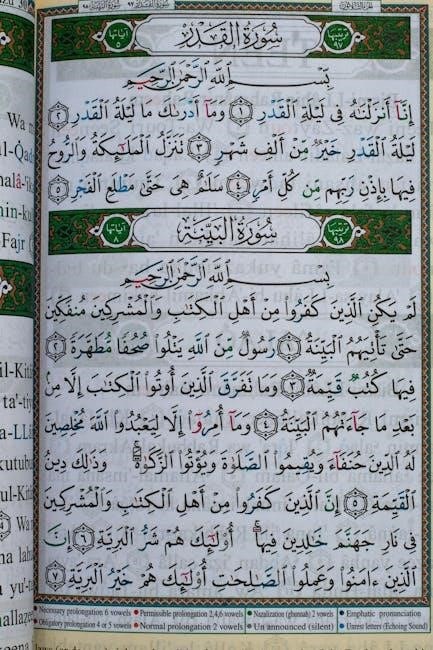
Arabic’s unique alphabet and pronunciation require dedicated study, often aided by PDF guides detailing proper articulation and ḥarakāt, crucial for grammatical accuracy.
Consonants and Vowels
Arabic features a robust consonant system, differing significantly from English, demanding focused practice using resources like dedicated PDF guides. Mastering these sounds is foundational for accurate pronunciation and comprehension.
Vowels, often represented by diacritics, dramatically alter meaning; therefore, a PDF focusing on vowel sounds and their combinations is invaluable. Pronunciation guides, often available digitally, help learners navigate these nuances, building a strong phonetic base for grammatical study.
Deborah Gronau’s career service resources at FH Meschede emphasize skill development, indirectly supporting accurate pronunciation alongside grammatical understanding.
Diacritics (Ḥarakāt) and Their Role
Diacritics, known as Ḥarakāt, are crucial in Arabic, indicating vowel sounds and grammatical functions often absent in written form. A comprehensive PDF resource detailing these marks is essential for accurate reading and understanding.
These symbols significantly impact word meaning, making their mastery non-negotiable. Resources from institutions like FH Meschede, potentially accessible through Deborah Gronau’s career services, can aid in this process.
Effective PDF guides will illustrate Ḥarakāt’s role in case endings and verb conjugation, solidifying grammatical foundations.
Basic Sentence Structure in Arabic
Arabic commonly employs a Verb-Subject-Object (VSO) order, though variations exist. A helpful PDF guide clarifies these structures, aiding learners in building grammatically correct sentences.
Understanding Ism-Khabar (nominal) sentences is also key, and resources can provide clear examples.
Verb-Subject-Object (VSO) Order
Arabic frequently utilizes a Verb-Subject-Object (VSO) sentence structure, differing from the more common Subject-Verb-Object (SVO) order found in English. A comprehensive PDF resource detailing Arabic grammar is invaluable for grasping this fundamental aspect.
Mastering VSO requires recognizing how verbs initiate sentences, influencing word order and grammatical relationships. Resources from institutions like FH Meschede, potentially through Deborah Gronau’s career services, can offer targeted exercises and explanations. Understanding this order is crucial for both reading comprehension and accurate sentence construction, and a well-structured PDF can significantly aid this process.
Nominal Sentences (Ism-Khabar)
Arabic employs Nominal Sentences (Ism-Khabar), beginning with a noun (Ism) followed by a predicate (Khabar), differing from verbal sentences. A detailed PDF guide to Arabic grammar is essential for navigating this structure effectively.
These sentences emphasize the subject, often used for descriptions or definitions. Resources, potentially accessible through FH Meschede’s career services and Deborah Gronau, can provide clear examples and practice exercises. A quality PDF will illustrate how to correctly form and interpret Ism-Khabar sentences, enhancing overall language proficiency.

Noun Morphology (Asmā’)
Arabic noun morphology, detailed in a helpful PDF, explores gender, number, and definiteness—crucial elements for accurate sentence construction and comprehension;
Deborah Gronau’s career service resources at FH Meschede can aid in mastering these foundational aspects of the language.
Gender and Number
Arabic nouns possess grammatical gender – masculine or feminine – impacting agreement with adjectives and verbs, a concept often clarified in a comprehensive PDF guide.
Number distinctions include singular, dual, and plural forms, each with specific morphological markers. Mastering these forms is vital for constructing grammatically correct sentences.
Resources from FH Meschede, potentially through Deborah Gronau’s career services, can offer practical exercises and explanations to solidify understanding of these core morphological features.
Definiteness and Indefiniteness
Arabic distinguishes nouns as definite or indefinite, significantly affecting sentence structure and meaning; a well-structured PDF resource is invaluable for grasping these nuances.
Definiteness is typically marked by the prefix “al-,” similar to “the” in English, while indefiniteness lacks this marker. This distinction impacts case endings and verb agreement.
Deborah Gronau at FH Meschede’s Career Service could potentially direct students to materials clarifying these concepts, aiding in accurate language application and comprehension.
Verb Conjugation (Afʿāl)
Arabic verb conjugation, detailed in helpful PDF guides, relies on root letters and patterns to indicate tense and person, demanding focused study.
Resources supporting FH Meschede students, like those offered by Deborah Gronau, can aid in mastering these complex forms.
Verb Roots and Patterns
Arabic verbs are uniquely constructed from a three (usually) consonant root, carrying the core meaning; this root is then inserted into various wazn (patterns) to create different forms and tenses.
A PDF resource detailing these patterns is invaluable, as memorization is key. Understanding how these roots interact with patterns, as supported by resources like those at FH Meschede and facilitated by Deborah Gronau, is crucial for both comprehension and accurate verb formation.
These patterns dictate voice, transitivity, and other grammatical features.
Past, Present, and Future Tenses
Arabic verb tenses are largely indicated through prefixes and suffixes attached to the verb root and pattern, rather than solely through conjugation like in English. A comprehensive PDF guide is essential for mastering these nuances.
Resources supporting language skill development, such as those offered by Deborah Gronau at FH Meschede, can aid in recognizing these markers. Understanding these tense formations, alongside root and pattern knowledge, is vital for constructing grammatically correct sentences.
Future tense often utilizes prefixes.
Pronouns (Ḍamā’ir)
Arabic pronouns, detailed in helpful PDF guides, include personal and demonstrative forms, crucial for sentence construction and clarity. Deborah Gronau’s resources aid understanding.
Mastering these forms is key to fluent communication.
Personal Pronouns
Arabic personal pronouns, often clearly outlined in a comprehensive PDF grammar resource, are fundamental building blocks for constructing sentences. These pronouns denote the speaker, the addressed person, or those being discussed.
Understanding their forms – أنا (I), أنتَ (you ー masculine), أنتِ (you ⏤ feminine), هو (he), هي (she), نحن (we), أنتم (you ⏤ plural), هن (they) – is vital. Resources from professionals like Deborah Gronau at FH Meschede can significantly aid learners in grasping these essential elements of Arabic grammar, improving both reading and speaking skills.
Demonstrative Pronouns
Arabic demonstrative pronouns, effectively detailed within a dedicated PDF grammar guide, indicate proximity or distance. These pronouns – هذا (this ー masculine), هذه (this ー feminine), ذلك (that ー masculine), تلك (that ー feminine) – are crucial for specifying nouns.
Mastering their usage, alongside gender and number agreement, is key to accurate expression. Resources, potentially similar to those utilized by students supported by Deborah Gronau at FH Meschede, provide clear explanations and examples, fostering confident communication in Arabic.

Prepositions (Ḥurūf al-Jar)
Arabic prepositions, thoroughly explained in a PDF grammar resource, govern nouns and pronouns, indicating relationships like location or time, essential for sentence construction.
Common Prepositions and Their Uses
Common Arabic prepositions, detailed within a comprehensive PDF grammar guide, include fī (in), ʿalā (on), min (from), ilā (to), and bi (with/by). Mastering these is crucial for forming grammatically correct sentences.
Resources from institutions like FH Meschede, supported by professionals like Deborah Gronau, emphasize practical application. Understanding their nuances, often clarified in PDF materials, allows learners to express relationships between words effectively, building a strong foundation in Arabic.

Adjectives and Adverbs
Arabic adjectives and adverbs, thoroughly explained in a PDF grammar guide, require agreement with nouns, a key concept for accurate expression and fluency.
Deborah Gronau’s career service resources at FH Meschede can aid in mastering these linguistic elements.
Agreement with Nouns
Arabic exhibits a robust system of agreement where adjectives and other modifiers must align with the nouns they describe in gender, number, and case.
A comprehensive PDF resource detailing Arabic grammar is crucial for understanding these nuances. This agreement extends to verb conjugations and pronoun references, creating a cohesive linguistic structure.
Resources from Deborah Gronau at FH Meschede, alongside dedicated textbooks, can help learners navigate these complexities, improving both comprehension and accurate language production.
Formation and Usage
Adverbs in Arabic are often formed from adjectives, utilizing specific patterns detailed in grammar PDF resources. Their usage modifies verbs, adjectives, or other adverbs, adding descriptive detail.
Understanding these formations requires a solid grasp of root words and morphological rules. Resources like those promoted by NYU Abu Dhabi’s Nasser, alongside support from Deborah Gronau at FH Meschede, are invaluable.
Mastering adverb formation enhances expressive capabilities and overall fluency in the language.

Case Endings (Iʿrāb)
Iʿrāb, detailed in Arabic grammar PDF guides, signifies a word’s grammatical function through vowel markings, impacting sentence meaning and structure.
Deborah Gronau’s career services at FH Meschede emphasize language skill mastery, including these crucial elements.
Nominative, Accusative, and Genitive Cases
Understanding Iʿrāb’s core cases—nominative (rāfiʿ), accusative (naṣb), and genitive (jar)—is fundamental, often clarified through comprehensive Arabic grammar PDF materials. The nominative marks the subject, the accusative the direct object, and the genitive indicates possession or other relationships.
Mastering these distinctions, supported by resources and career guidance like that offered by Deborah Gronau at FH Meschede, is vital for accurate sentence construction and interpretation. Correct application ensures clarity and avoids grammatical errors.
Dual Form in Arabic
Arabic’s unique dual form, detailed in grammar PDF guides, signifies exactly two of something, differing from singular or plural forms, aiding precise expression.
Resources, like those potentially highlighted by Deborah Gronau, help navigate this nuanced aspect of the language.
Usage and Formation
The dual form in Arabic is employed when referring specifically to two entities, distinct from singular or plural constructions. PDF grammar resources meticulously outline its formation, typically involving specific suffixes added to nouns and adjectives.
Understanding these patterns, potentially aided by materials Deborah Gronau might recommend, is crucial. It’s not merely a grammatical quirk; it reflects a precision in Arabic expression. Mastering this form enhances clarity and demonstrates linguistic competence, benefiting learners seeking fluency.
Broken Plurals
Broken plurals, detailed in PDF guides, represent irregular plural forms in Arabic, altering the noun’s internal vowel structure—a challenging yet vital aspect.
Resources supporting FH Meschede students, like those potentially curated by Deborah Gronau, can aid in mastering these patterns.
Common Patterns and Examples
Arabic broken plurals follow diverse patterns, often detailed in comprehensive PDF grammar resources. Common forms include those shifting vowels (like kitāb – book, kutub – books) or altering the consonant structure.
Understanding these patterns requires dedicated study, potentially aided by materials accessible through career services like those at FH Meschede, where Deborah Gronau provides support. Examples include patterns like faʿl becoming aflāʿ, or mafʿūl becoming mafʿūlāt, each with numerous variations.

Verbal Nouns (Masdars)
Masdars, or verbal nouns, represent actions as concepts, often detailed in PDF grammar guides. Resources from FH Meschede, supported by Deborah Gronau, can help!
Formation and Function
Masdars are typically formed from verb roots using specific patterns, detailed within comprehensive Arabic grammar PDF resources. They function as nouns, representing the abstract idea of the action itself – for example, ‘knowing’ rather than ‘he knows.’
These verbal nouns can act as subjects or objects within sentences, and are crucial for understanding complex grammatical structures. Deborah Gronau’s career service resources at FH Meschede could point students towards helpful learning materials, aiding in mastering this essential aspect of the language.

Relative Pronouns (Asmā’ al-Mawṣūl)
Arabic relative pronouns, explained in detail within a PDF grammar guide, connect clauses and modify nouns, requiring agreement in gender and number for clarity.
Usage and Agreement Rules
Relative pronouns (asmā’ al-mawṣūl) in Arabic introduce relative clauses, providing additional information about a preceding noun. A comprehensive PDF resource details crucial agreement rules; the pronoun must match the ma’lūf (antecedent) in gender, number, and case.
For example, ‘alladhī’ (الذي) is masculine singular nominative, while ‘allatī’ (التي) is feminine singular nominative. Understanding these nuances, often clarified in study materials, is vital for constructing grammatically correct and meaningful sentences, as emphasized by resources like those at FH Meschede.
Conditional Sentences
Conditional sentences in Arabic, best understood with a detailed PDF guide, express ‘if-then’ relationships, utilizing specific particles and verb forms for clarity.
Resources from institutions like FH Meschede, alongside comprehensive texts, aid in mastering these complex structures.
Types of Conditional Clauses
Arabic conditional clauses, thoroughly explained in a dedicated PDF resource, primarily fall into two main categories: sharṭī jazm (جزْم) and sharṭī nasb (نصب). The first utilizes the in particle (إنْ) followed by a verb in the jussive mood, expressing a strong condition.
Conversely, sharṭī nasb employs idha (إذا) or law (لو) with a verb in the subjunctive mood, indicating a less certain or hypothetical scenario. Understanding these distinctions, aided by resources like those offered by Deborah Gronau, is crucial for accurate sentence construction.
Common Grammatical Errors for Learners
PDF guides highlight frequent errors like incorrect iʿrāb (case endings) and gender agreement, areas where learners often struggle, needing focused practice and review.
Deborah Gronau’s career services can help refine language skills for professional applications.
Identifying and Avoiding Mistakes
Utilizing a comprehensive Arabic grammar PDF is crucial for pinpointing common errors. Learners frequently stumble with idafa constructions, verb conjugations, and proper use of prepositions.
Regularly reviewing examples and practicing sentence construction, aided by resources like those promoted by Deborah Gronau at FH Meschede, builds confidence. Focus on mastering case endings (iʿrāb) and gender agreement, as these underpin accurate expression. Seeking feedback from instructors or language partners is invaluable for identifying and correcting persistent mistakes.

Resources for Learning Arabic Grammar (PDF Focus)
PDF textbooks and workbooks offer structured Arabic grammar study. Deborah Gronau’s Career Service at FH Meschede provides guidance, aiding learners in finding suitable materials.
Recommended PDF Textbooks and Workbooks
Locating effective PDF resources is crucial for self-paced Arabic grammar study. While specific titles aren’t directly mentioned in the provided text, leveraging university career services like those at FH Meschede—with Deborah Gronau’s expertise—can unveil valuable recommendations.
Students can explore online platforms and digital libraries for comprehensive workbooks. Focusing on materials that align with structured learning and offer practical exercises will enhance comprehension and skill development. Remember to prioritize resources that cover foundational concepts thoroughly.
Deborah Gronau and Career Service Resources at FH Meschede
Deborah Gronau at FH Meschede’s Career Service optimizes student resumes and connects them with employers, potentially aiding language skill application and career pathways.
Utilizing Career Services for Language Skills
FH Meschede’s Career Service, spearheaded by Deborah Gronau, provides invaluable support for students seeking to leverage their Arabic language skills professionally. Gronau offers resume optimization and direct connections to companies.
This service extends to guidance on applications and career paths, potentially highlighting the value of Arabic proficiency. Resources available through moodle further enhance preparation, bridging academic learning with real-world opportunities. Students can explore internships and thesis options via the FH Meschede job board.