
Surah Al-Fatiha, the opening chapter, is foundational; readily available as a ‘First Para of Quran PDF’ for accessible study and recitation globally.
Historical Significance of Al-Fatiha
Historically, Surah Al-Fatiha holds immense importance as the first revealed portion of the Quran, often compiled as a ‘First Para of Quran PDF’ for preservation. Early Muslims prioritized its memorization and recitation, establishing its central role in daily prayers – Salah.
The standardization of its written form, particularly within the Uthmani script found in many PDF versions, reflects a conscious effort to maintain textual integrity across generations. Its inclusion as the opening chapter signifies its spiritual weight and serves as a gateway to the Quranic message. The widespread availability of the ‘First Para of Quran PDF’ demonstrates its continued relevance and accessibility for learners worldwide, bridging historical practice with modern digital resources.
The Meaning of “First Para” in Quranic Context
In Quranic terminology, a “Para” (or Sipara) denotes a section of the Quran, facilitating manageable reading and memorization. The “First Para,” commonly distributed as a ‘First Para of Quran PDF’, encompasses the initial verses, crucially including Surah Al-Fatiha and extending into Surah Al-Baqarah.
This division isn’t historically fixed but evolved for pedagogical purposes. A ‘First Para of Quran PDF’ often serves as an entry point for beginners, offering a concise segment for initial learning. Its significance lies in containing the foundational prayer – Al-Fatiha – and the opening verses of the longest chapter, establishing core Islamic principles. Digitization via PDF format enhances accessibility and preservation of this vital section.

Understanding Surah Al-Fatiha
Surah Al-Fatiha, the Quran’s opening, is universally recited in daily prayers; a ‘First Para of Quran PDF’ provides easy access for study.
The Seven Verses (Ayat) of Al-Fatiha
Al-Fatiha comprises seven distinct verses (ayat), each holding profound significance. A readily available ‘First Para of Quran PDF’ clearly delineates these verses, aiding in focused study and memorization. The verses progress from praising Allah – ‘Lord of the Worlds’ – to seeking guidance on the straight path.
These verses, when accessed through a PDF format, allow for detailed examination of the Arabic text alongside its translation. Learners can easily identify each verse and its specific meaning. The PDF often includes transliteration, assisting non-Arabic speakers with proper pronunciation. Understanding each ayat’s context is crucial, and a well-formatted First Para of Quran PDF facilitates this process, making it an invaluable resource for both beginners and advanced students.
Linguistic Analysis of Key Terms
A ‘First Para of Quran PDF’ enables detailed linguistic study of Surah Al-Fatiha’s core terms. Words like ‘Rabb’ (Lord), ‘Rahman’ (Most Gracious), and ‘Malik’ (King) possess rich etymological roots. Examining these terms within the PDF allows for a deeper understanding of their nuances.
Many PDF versions include interlinear translations and lexical notes, clarifying the original Arabic meaning. Analyzing the verb conjugations and grammatical structures, easily accessible in a digital PDF, reveals the precision of the Quranic language. This linguistic exploration, facilitated by the First Para of Quran PDF, enhances comprehension and appreciation of the text’s beauty and power, benefiting students and scholars alike.

The PDF Format and Accessibility
First Para of Quran PDF files offer convenient, portable access to the text, enabling study on various devices and promoting wider Quranic accessibility.
Why PDFs are Popular for Quranic Texts
PDFs have become a dominant format for distributing the First Para of Quran, and the entire Quran, due to their inherent advantages. Primarily, PDFs ensure consistent formatting across all platforms – Windows, macOS, Android, and iOS – preserving the sacred text’s visual integrity. This consistency is crucial for accurate recitation and study.
Furthermore, PDFs are easily shareable via email, messaging apps, and websites, facilitating widespread access. They are also relatively lightweight files, making downloads quick and efficient, even on slower internet connections. The format supports high-resolution images, vital for displaying the intricate Uthmani script clearly.
Importantly, PDFs can be viewed offline, allowing users to engage with the Quran anytime, anywhere, without requiring an internet connection. This accessibility is particularly valuable for those in remote areas or during travel.
Benefits of a ‘First Para of Quran PDF’
A ‘First Para of Quran PDF’ offers numerous benefits for learners of all levels. It provides a portable and readily accessible resource for daily recitation and memorization. The PDF format allows for easy navigation, enabling quick access to specific verses or pages. Many PDFs include Tajweed rules highlighted, aiding in correct pronunciation and recitation.
These digital versions often feature the standardized Uthmani script, ensuring accuracy and consistency. Users can easily print copies for personal use or share them with others. The ability to zoom in enhances readability, particularly for those with visual impairments.
Furthermore, PDFs facilitate annotation, allowing students to mark verses, add notes, and track their progress. This interactive feature promotes deeper engagement with the text and aids in comprehension.
Sources for Reliable PDF Downloads
Finding trustworthy sources for a ‘First Para of Quran PDF’ is crucial for accuracy. Reputable Islamic websites like Quran.com and Bayna Yadayk often provide high-quality PDF versions. Several Islamic publishing houses, such as Darussalam, offer downloadable PDFs of the Quran, including the first para.
Mobile applications dedicated to the Quran, like Muslim Pro and Quran Majeed, frequently include PDF export options. Be cautious when downloading from unfamiliar websites; verify the source’s authenticity to avoid errors or misprints.
Always prioritize PDFs that adhere to the Uthmani script and include clear Tajweed markings. Checking user reviews and seeking recommendations from trusted scholars can also help ensure the reliability of the downloaded material.
Features of Common ‘First Para of Quran PDF’ Versions
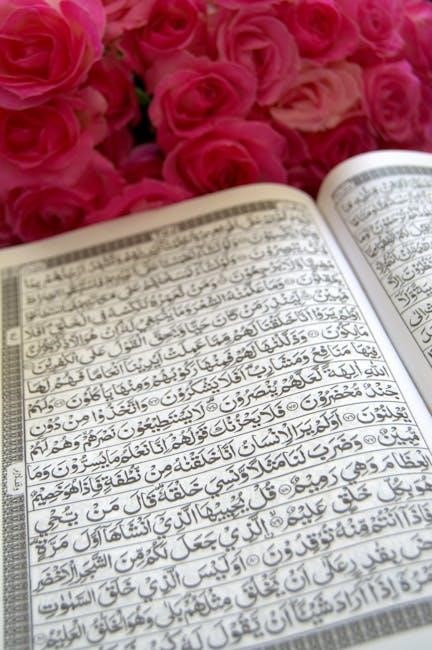
First Para of Quran PDF versions commonly feature the Uthmani script, clear Tajweed rules, and standardized formatting for accurate recitation and study.
Uthmani Script and Standardization
Uthmani script, named after the third Caliph Uthman ibn Affan (RA), is the standard script for the Quran and is almost universally found in ‘First Para of Quran PDF’ versions. This script was meticulously standardized during his era to ensure consistency and preserve the divine revelation accurately.
PDFs utilizing this script offer readers a familiar and reliable visual representation of the Quranic text. The standardization minimizes variations in letterforms, diacritical marks, and overall layout, crucial for correct pronunciation and understanding. This consistency is particularly valuable for learners and those memorizing the Quran.
The adoption of the Uthmani script in digital PDFs ensures that the text remains faithful to the original manuscript, providing a trustworthy resource for recitation, study, and reflection. It’s a cornerstone of authentic Quranic presentation.
Tajweed Rules Highlighted in PDFs
Many ‘First Para of Quran PDF’ versions now incorporate Tajweed rules – the science of correct Quranic pronunciation – directly into the text. These PDFs utilize color-coding and symbols to indicate rules like madd (elongation), idgham (assimilation), and ikhfa (concealment).
This visual aid is incredibly beneficial for students learning Tajweed, allowing them to identify and apply the rules while reading. Highlighting helps distinguish between different pronunciations and prevents common errors.
Advanced PDFs may even offer interactive features, explaining each rule when clicked. Such features transform a static PDF into a dynamic learning tool, making mastering Tajweed more accessible and efficient. These PDFs bridge the gap between traditional learning and digital convenience.
Different Recitation (Tajweed) Styles
While the Quranic text remains consistent, recitation styles – known as Qira’at – vary. Some ‘First Para of Quran PDF’ resources acknowledge these differences, offering options to view the text according to various recognized Qira’at, such as Hafs, Warsh, or Qalun.
These PDFs might subtly indicate variations in vowel markings or consonantal pronunciations specific to each style. This caters to learners following different teachers or traditions.
However, it’s crucial to note that most widely available PDFs primarily focus on the Hafs recitation, being the most prevalent globally. Finding PDFs supporting multiple Qira’at can be challenging, but specialized resources are emerging to address this need, enhancing inclusivity and scholarly study.
Using a ‘First Para of Quran PDF’ for Learning
First Para of Quran PDF files facilitate convenient memorization, Tajweed practice, and annotation for focused study, enhancing the learning experience significantly;
Memorization Techniques with PDF Support
Utilizing a First Para of Quran PDF streamlines memorization through repeated reading and focused ayah (verse) isolation. Highlighting each ayah as it’s mastered visually reinforces retention.
Digital PDFs allow for looping specific sections, aiding in rhythmic recitation and embedding the verses in memory. Annotating the PDF with transliteration or translation alongside the Arabic text provides a multi-sensory learning approach.
Employing spaced repetition – revisiting memorized portions at increasing intervals – is easily managed with bookmarks within the PDF. Furthermore, listening to audio recitation alongside reading the PDF strengthens auditory memory and pronunciation. Consistent, focused practice with these PDF-supported techniques yields effective results.
Utilizing PDFs for Tajweed Practice
A First Para of Quran PDF featuring highlighted Tajweed rules is invaluable for correct pronunciation. Many PDFs color-code rules like madd, idgham, and ghunna, providing visual cues during recitation.

Students can actively practice applying these rules by annotating the PDF, marking instances of each Tajweed application. Comparing their markings with a verified version ensures accuracy.
Digital PDFs facilitate listening to a Qari (reciter) and simultaneously following along, observing how Tajweed rules are implemented. Utilizing zoom functionality allows for detailed examination of the Arabic script and vowel markings. Consistent practice with these PDF tools builds a strong foundation in Tajweed.
Tools for Annotating and Studying the PDF
A First Para of Quran PDF becomes a dynamic study tool with the right software. PDF annotation tools allow highlighting verses, adding notes on Tafsir (explanation), and marking difficult words.
Digital pens and tablets enable direct writing on the PDF, mimicking traditional study methods. Features like bookmarks and search functions quickly locate specific verses or topics.
Cloud storage ensures access across devices, facilitating continuous learning. Some PDFs integrate with Quranic dictionaries for instant word definitions. Utilizing these tools transforms a static PDF into an interactive and personalized learning experience, enhancing comprehension and retention of the Quran.

Legal and Copyright Considerations
First Para of Quran PDF distribution requires respecting copyright; ensure sources offer permissable use, avoiding unauthorized reproduction or modification of the text.
Copyright Issues Related to Quranic PDFs
Copyright surrounding First Para of Quran PDF files is complex. While the Quranic text itself is considered public domain, specific translations, transcriptions (like Uthmani script renderings), and added features – such as Tajweed color-coding or audio links – are subject to copyright.
Distributing a PDF containing a copyrighted translation without permission infringes on the translator’s rights. Similarly, reproducing a uniquely formatted PDF created by a publisher requires authorization. Many free PDFs online may lack proper licensing, posing legal risks for users sharing them widely.
It’s crucial to verify the source and licensing terms before downloading or distributing any First Para of Quran PDF to ensure compliance with intellectual property laws and ethical considerations.
Permissible Use and Distribution
Generally, personal use of a First Para of Quran PDF – for individual study, memorization, or private recitation – is widely considered permissible. Sharing the PDF with family and friends for non-commercial purposes often falls within fair use guidelines, provided it doesn’t circumvent copyright protections.
However, mass distribution, especially for profit, requires explicit permission from the copyright holder. Creating derivative works (e.g., modifying the PDF and reselling it) is typically prohibited without a license.
Utilizing PDFs from reputable sources with clear licensing terms minimizes legal risks. Supporting publishers and translators by purchasing authorized versions demonstrates respect for their work and ensures continued access to quality resources.

Advanced Features in Digital Quran PDFs
First Para of Quran PDF versions now offer search, integrated audio recitation, and interactive learning tools, enhancing study and memorization experiences.
Search Functionality within the PDF
Search functionality within a ‘First Para of Quran PDF’ is an invaluable tool for students and researchers alike. It allows for quick location of specific words, phrases, or even Tajweed markings within the text. This feature drastically reduces the time spent manually scanning the pages, especially when studying complex grammatical structures or seeking specific verses for reflection.
Users can efficiently find instances of Arabic words with their transliterations, aiding in pronunciation and understanding. Furthermore, the search function proves beneficial when cross-referencing with Tafsir (commentary) or other related Islamic texts. Modern PDF readers often support advanced search options, such as case-sensitive searches and whole-word matching, providing even greater precision and control.
Audio Recitation Integration
Many contemporary ‘First Para of Quran PDF’ versions now incorporate audio recitation integration, significantly enhancing the learning experience. This feature allows users to listen to the recitation of Al-Fatiha by renowned Qaris (reciters) directly within the PDF document. It’s particularly helpful for mastering correct pronunciation (Tajweed) and understanding the melodic aspects of Quranic recitation.
Users can often synchronize the audio with the text, highlighting each word as it’s recited. This interactive approach aids memorization and fosters a deeper connection with the divine text. Different recitation styles and Qaris are frequently offered, catering to diverse preferences. This integration transforms a static PDF into a dynamic and immersive learning tool.
Interactive Learning Features
Modern ‘First Para of Quran PDF’ resources are evolving beyond static text, incorporating interactive learning features. These include clickable verses for detailed explanations, pop-up definitions of key Arabic terms, and quizzes to test comprehension. Some PDFs offer built-in translation tools, displaying translations alongside the Arabic text for easier understanding.
Furthermore, features like bookmarking specific verses, highlighting important passages, and adding personal notes directly within the PDF enhance the study process. Interactive exercises focusing on Tajweed rules are also becoming common. These features transform the PDF from a simple document into a personalized and engaging Quranic learning platform, suitable for all levels.

Comparison of Different PDF Versions
First Para of Quran PDF quality varies; assessing accuracy, script clarity (Uthmani is preferred), and Tajweed highlighting is crucial when choosing a reliable version.
Evaluating PDF Quality and Accuracy
Assessing a ‘First Para of Quran PDF’ requires careful scrutiny. Accuracy is paramount; verify the text against established Quranic manuscripts to ensure no errors exist in the Arabic script. PDF quality hinges on clear legibility – the Uthmani script should be crisp and easily readable, avoiding blurry or distorted characters.
Tajweed rules, if highlighted, must be accurate and consistent with recognized recitation standards. Check for proper placement of harakat and madd signs. Compare multiple PDFs from different sources to identify discrepancies. Look for PDFs created by reputable Islamic organizations or publishers known for their commitment to precision. A high-resolution PDF generally indicates better quality and attention to detail, facilitating comfortable reading and study.
Popular PDF Providers and Their Offerings
Several platforms offer the ‘First Para of Quran PDF’. Quran.com provides a clean, easily navigable PDF with Uthmani script and audio recitation links. Bayna Yadayk offers comprehensive PDFs, often including Tajweed rules and color-coded aids, though potentially requiring purchase. IslamicFinder.org delivers free, downloadable PDFs in various sizes and formats, suitable for different devices.
Dilyara.com is known for aesthetically pleasing PDFs with clear script. Many individual Islamic websites and scholars also host PDFs; however, verifying their accuracy is crucial. Some providers offer enhanced features like searchable text and annotation capabilities. Consider storage space and download speeds when choosing a provider.

Future Trends in Digital Quranic Resources
AI-powered tools will enhance ‘First Para of Quran PDF’ study, offering personalized learning, improved Tajweed assistance, and interactive experiences.
AI-Powered Quranic Study Tools
Artificial intelligence is poised to revolutionize how we interact with the ‘First Para of Quran PDF’ and beyond. Imagine AI-driven features within these PDFs that offer real-time Tajweed correction, identifying pronunciation errors as you recite, enhancing learning.
Furthermore, AI can personalize the learning experience, adapting to your pace and identifying areas needing improvement. Smart search functionality will move beyond simple keyword searches, understanding contextual meaning within the verses.
AI could also generate customized quizzes and exercises focused on memorization and understanding of Surah Al-Fatiha. Translation accuracy and nuanced explanations will also benefit from AI’s capabilities, making the Quran more accessible to a wider audience. These tools promise a more engaging and effective study experience.
Enhanced PDF Features and Accessibility
Future ‘First Para of Quran PDF’ versions will prioritize user experience through innovative features. Layered PDFs will allow users to toggle between script views – Uthmani, transliteration, and translation – enhancing comprehension. Interactive Tajweed markings will provide audio pronunciations upon clicking specific symbols, aiding correct recitation.
Accessibility is key; PDFs will be optimized for screen readers, benefiting visually impaired learners. Adjustable font sizes and customizable color themes will cater to individual preferences.
Integration with cloud storage will enable seamless access across devices. Furthermore, collaborative study features, like shared annotations, will foster a community learning environment. These enhancements aim to make the Quran universally accessible and engaging.