Wolf Steam Oven Manual: Comprehensive Troubleshooting & Operation
This manual provides detailed guidance for Wolf convection steam oven owners, covering operation, maintenance, and resolving common issues like heating problems and steam function failures.
Wolf convection steam ovens represent a pinnacle of culinary technology, seamlessly blending convection baking with the benefits of steam cooking. These ovens deliver exceptional results, from perfectly roasted meats to incredibly moist cakes. Understanding the unique features and capabilities of your Wolf oven is crucial for optimal performance. This guide will navigate you through the intricacies of operation, troubleshooting, and maintenance, ensuring years of reliable service.
Proper usage extends beyond basic baking; mastering steam functions unlocks a world of flavorful possibilities.
Understanding Oven Controls & Display
The Wolf convection steam oven features an intuitive control panel and a comprehensive display. Familiarize yourself with the function selection dials, temperature settings, and steam mode options. The display provides crucial information, including oven temperature, cooking time, and status messages like “Water is being pumped off.”
Understanding these indicators is key to successful operation. Learn to interpret error codes and utilize the display’s feedback for precise control and optimal cooking results.
Common Wolf Steam Oven Issues & Solutions
This section details frequent problems with Wolf steam ovens, offering practical solutions for issues like power failures, display malfunctions, and steam function errors.
Oven Fails to Operate – No Power
If your Wolf steam oven isn’t powering on, begin with the simplest checks. First, carefully check the household fuse or circuit breaker dedicated to the oven; a tripped breaker or blown fuse is a common cause. Verify the power supply is functioning correctly, ensuring the outlet receives power with another device.
If the issue persists, consult a qualified technician. Do not attempt electrical repairs yourself, as this could be dangerous. A professional can accurately diagnose and resolve more complex power-related problems within the oven’s system.
Checking Household Fuse or Circuit Breaker
Begin troubleshooting a non-operational oven by inspecting your home’s electrical panel. Locate the circuit breaker or fuse specifically assigned to the Wolf steam oven. Carefully check if the breaker has tripped to the “off” position or if the fuse is blown. If either is found, reset the breaker or replace the fuse with one of the correct amperage.
If the breaker trips again immediately, or the fuse blows repeatedly, avoid further attempts and contact a qualified electrician to investigate a potential short circuit.
Power Supply Verification
After confirming the household fuse or circuit breaker is functioning correctly, verify power is reaching the oven itself. Ensure the oven’s power cord is securely plugged into a working electrical outlet. Test the outlet with another appliance to confirm it’s delivering power. If the outlet isn’t working, check its circuit breaker as well.
If power is confirmed at the outlet, but the oven still won’t operate, a more complex internal electrical issue may exist, requiring professional service.
Display Issues – No Illumination
A completely dark display indicates a potential problem with the oven’s control board or internal lighting. First, check if the oven has any power (see “Oven Fails to Operate”). If power is present, the display itself may be faulty. Internal lighting problems can also cause a dark display, so verify if any oven lights are working.
Troubleshooting display malfunctions often requires professional diagnosis and repair due to the complexity of the control system.
Troubleshooting Display Malfunctions
If the display is unresponsive or shows incorrect information, begin by attempting a power cycle – turn off the oven at the breaker for several minutes, then restore power. If the issue persists, it suggests a deeper problem within the control board or display unit itself. Due to the intricate electronic components, diagnosing these malfunctions typically necessitates specialized tools and expertise.
Professional service is highly recommended for accurate assessment and repair.
Internal Lighting Problems
If the oven’s internal light isn’t functioning, first verify the oven door is fully closed, as a safety feature prevents illumination when open during operation. If the light remains out, the bulb itself may be the culprit and require replacement. However, a lack of illumination can also indicate a more complex electrical issue within the oven’s wiring or control board.
Professional diagnosis is advised for electrical concerns.
Oven Not Heating – Temperature Concerns
If your Wolf steam oven isn’t reaching the set temperature, or isn’t heating at all, several factors could be at play. Begin by verifying the oven is set to the correct mode – convection steam requires specific settings. Crucially, use an oven thermometer to confirm the internal temperature matches the display. Significant discrepancies suggest a need for recalibration, detailed in the full manual, or potentially a faulty heating element requiring professional attention.
Using an Oven Thermometer for Accuracy
An oven thermometer is an invaluable tool for diagnosing temperature inconsistencies within your Wolf steam oven. Place the thermometer centrally within the oven cavity, ensuring it doesn’t touch the walls. Set the oven to a known temperature, and allow sufficient time for stabilization. Compare the thermometer’s reading to the oven’s display; a substantial difference indicates potential calibration issues or a malfunctioning heating component, necessitating further investigation or professional service.
Oven Recalibration Procedures
If temperature discrepancies persist after verifying with a thermometer, your Wolf oven may require recalibration. Consult the full Wolf oven manual for specific instructions, as procedures vary by model. Typically, recalibration involves accessing the oven’s control settings and adjusting the displayed temperature to match the accurate reading from your oven thermometer. Exercise caution and follow the manual’s guidance precisely to avoid further complications or inaccurate temperature settings.
Steam Function Not Working
If your Wolf steam oven isn’t producing steam, begin by checking the water tank level; ensure it’s adequately filled. After utilizing steam modes, the oven automatically enters a “Water is being pumped off” cycle – wait for completion before attempting reuse. Resetting the steam mode to the recommended temperature and observing steam production is crucial. If issues persist, professional service is recommended for expert diagnosis and repair.
Checking Water Tank Levels
A primary cause of steam function failure is a low water level in the tank. Regularly inspect the tank, ensuring it’s filled to the appropriate capacity before each steam cycle. Do not interrupt the “Water is being pumped off” cycle after steam use, as this process prepares the tank for refilling. Always ensure the tank is properly seated before operation to prevent leaks and maintain consistent steam production.
Resetting Steam Mode After Use
Following a steam cycle, allow the oven to cool below 210°F before attempting to reset to Convection Steam mode. Opening the door facilitates cooling. If steam isn’t produced upon resetting, verify the water tank is full and correctly positioned. Repeated failures to generate steam necessitate professional service for expert diagnosis and repair, ensuring optimal oven performance and longevity.
Detailed Troubleshooting Guide
This section offers in-depth solutions for specific Wolf steam oven problems, including pan removal difficulties, convection issues, igniter failures, and burner concerns.
Difficulty Removing Oven Pans
Encountering trouble removing oven pans is a common issue. Ensure the oven has fully cooled before attempting removal, as pans can expand when heated. Utilize proper pan handling techniques, gripping firmly and pulling straight out. Inspect oven racks for any obstructions or damage that might hinder pan movement.
If pans remain stuck, avoid forceful removal which could damage the oven interior or the pans themselves. Gently rock the pan back and forth while pulling. Consult the Wolf oven manual for specific rack and pan guidance, ensuring correct placement and functionality.
Proper Pan Handling Techniques
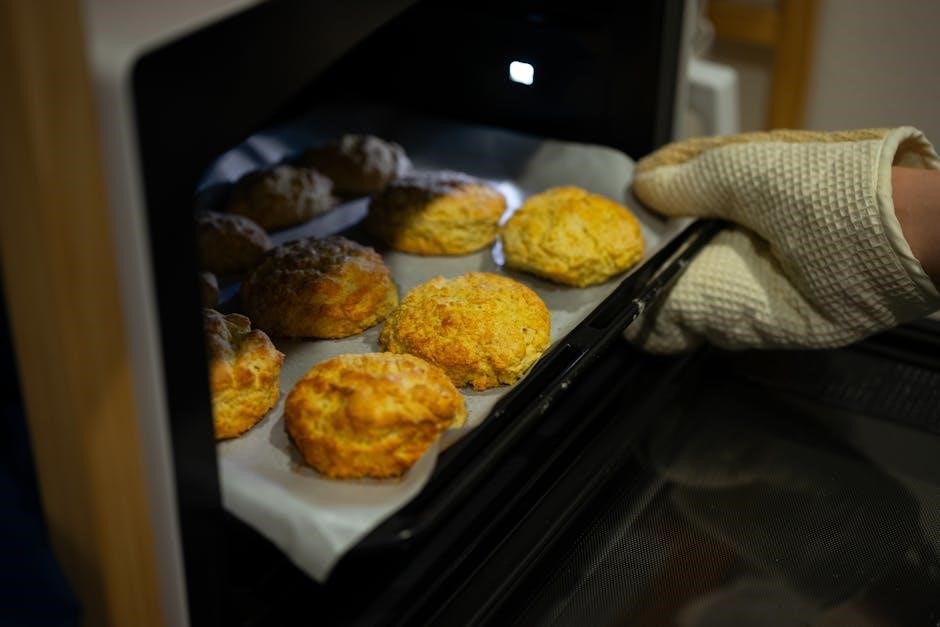
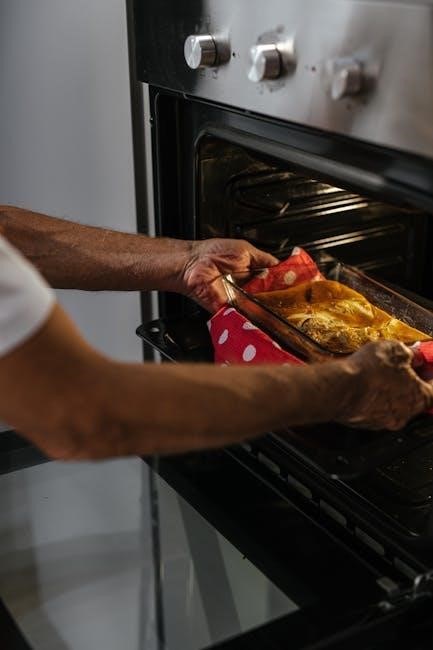
Safe and effective pan removal begins with allowing the oven to cool completely. Always use oven mitts or pot holders to protect your hands from residual heat. Grip the pan firmly with both hands, ensuring a secure hold. Pull the pan straight out, avoiding any twisting or tilting motions that could cause it to snag.
If resistance is felt, don’t force it; gently rock the pan side-to-side while continuing to pull. Avoid scraping the oven interior with the pan edges. Proper technique prevents damage to both the oven and cookware.
Oven Rack Issues & Solutions
Difficulty with oven racks often stems from food debris or warping; Regularly clean racks with a non-abrasive cleaner to prevent buildup. If a rack is bent, attempt to gently reshape it, but severely warped racks should be replaced. Ensure racks are fully seated in their designated supports before placing cookware.
Sticking racks can sometimes be resolved by applying a small amount of oven-safe lubricant to the rack slides. Always consult the Wolf manual for approved lubricants and safety precautions.
Convection Steam Mode Problems – No Heat or Steam
If your Wolf oven isn’t producing heat or steam in convection steam mode, allow the unit to cool completely – below 210°F – before attempting a reset. Open the door to expedite cooling. Then, re-select the convection steam setting at the recommended temperature.
Verify proper temperature settings. If the issue persists, professional service is crucial for accurate diagnosis and repair, as internal components may require attention.
Cooling Down Period Before Resetting
A critical step when troubleshooting convection steam mode issues is allowing sufficient cool-down time. The oven must reach a temperature below 210°F before attempting to reset the function. Opening the oven door significantly accelerates this cooling process, ensuring safe and effective operation.
Attempting a reset while the oven is still hot can lead to further complications or inaccurate readings, potentially damaging internal components. Patience is key!
Recommended Temperature Settings for Steam Mode
Optimal steam mode performance relies on selecting appropriate temperature settings. After the cool-down period, reset the unit to convection steam mode utilizing the manufacturer’s recommended temperatures for your specific dish. These settings ensure proper steam generation and even cooking.
Experimentation may be needed, but starting with suggested temperatures will yield the best results and prevent potential issues with steam production or food quality.
Igniter Failures (Range/Oven Combo Models)
Wolf range/oven combo models can experience igniter failures, preventing burner ignition. Identifying these problems often involves observing a lack of sparking or a slow, weak spark. Replacement is sometimes necessary, but should be approached cautiously.
Professional diagnosis is recommended, as incorrect replacement can lead to gas leaks or further damage. Skilled technicians can accurately assess the igniter and perform a safe, effective repair.
Identifying Igniter Problems
Diagnosing igniter issues in Wolf range/oven combos requires careful observation. A common sign is a burner that clicks repeatedly but doesn’t ignite, indicating the igniter is attempting to spark but failing. A weak or slow spark also points to a failing igniter.
Visually inspect the igniter for cracks or damage. If unsure, consult a qualified technician for a precise assessment and safe troubleshooting, avoiding potential gas hazards.
Igniter Replacement Considerations
Replacing a Wolf oven igniter is best left to qualified professionals due to the inherent risks associated with gas appliances. Incorrect installation can lead to gas leaks or improper operation, posing safety hazards. Always disconnect the power and gas supply before any repair attempt.
Ensure the replacement igniter is a genuine Wolf part for optimal performance and compatibility. Professional service guarantees a safe and effective repair.
Burner Clicking – But No Flame
If your Wolf range burner clicks repeatedly but fails to ignite, first verify the gas supply is fully open. A faulty igniter is a common cause, but a blocked burner port or issue with the burner assembly could also be responsible.
Carefully inspect the burner for debris and ensure proper gas flow. Professional diagnosis is recommended to pinpoint the exact cause and ensure safe repair.
Gas Supply Verification
When a burner clicks but doesn’t ignite, confirming adequate gas supply is the initial step. Ensure the main gas valve serving the appliance is open. Check other gas appliances to verify gas is reaching your home.
If other appliances also lack gas, contact your gas company immediately. For Wolf ranges, a qualified technician should inspect the gas regulator and supply line for obstructions or leaks before proceeding.
Troubleshooting Burner Assembly
If gas supply is confirmed, inspect the burner assembly itself. Remove the burner cap and check for debris or food particles obstructing the burner ports. Clean thoroughly with a wire brush or small pin.
Verify the igniter is properly aligned with the burner and producing a strong spark. A faulty igniter or misaligned position can prevent ignition. A professional technician may be needed for complex burner assembly issues.
Operation & Maintenance
Regular water tank management and understanding steam cycle operation are crucial for optimal performance, alongside proper oven door seal inspection and replacement procedures.
Water Tank Management
Maintaining the water tank is essential for consistent steam oven performance. Regularly filling and emptying the tank prevents mineral buildup and ensures optimal steam production. Always use high-quality water, ideally distilled or filtered, to minimize scaling.
Avoid removing the water tank while the “Water is being pumped off” message is displayed, as this process is critical for proper oven function. Consistent monitoring and care will extend the life of your Wolf steam oven and maintain its superior cooking capabilities.
Filling and Emptying the Water Tank
To fill the water tank, carefully remove it from the oven and locate the designated fill opening. Use filtered or distilled water to prevent mineral buildup, filling to the maximum fill line indicated. When emptying, ensure the oven is off and cool before removing and disposing of any remaining water.
Regularly emptying prevents stagnation and maintains steam quality. Always handle the tank with care to avoid spills and ensure proper seating upon re-installation.
Water Quality Recommendations
Wolf recommends using distilled or filtered water in your convection steam oven to minimize mineral deposits. Hard water can lead to scale buildup within the steam system, potentially affecting performance and requiring more frequent cleaning. Avoid using softened water, as the sodium content can also contribute to corrosion.
Consistent use of high-quality water extends the life of your oven and ensures optimal steam generation for consistently excellent cooking results.
Understanding Steam Cycle Operation
After utilizing any steam mode, the oven initiates a pump-off cycle, displaying “Water is being pumped off.” It’s crucial not to remove the water tank during this phase, as it’s actively draining residual water from the steam system. This process ensures proper maintenance and prevents potential damage.
Allow the cycle to complete before refilling or emptying the tank for optimal performance and longevity of your Wolf convection steam oven.
“Water is being pumped off” Message Explained
The “Water is being pumped off” message indicates the oven is automatically removing remaining water from the steam system after a steam-based cooking cycle. This is a normal and essential part of the oven’s operation, preventing mineral buildup and ensuring optimal steam generation for future use.
Do not interrupt this process by removing the water tank; allow the cycle to finish completely before handling the tank.
Proper Steam Mode Usage
To utilize Steam Mode effectively, ensure the water tank is filled before starting. Select the desired convection steam setting and temperature, remembering to allow a cooling down period if switching from another mode. Open the door to cool below 210°F before resetting if issues arise.
Proper usage maximizes steam’s benefits for moist, flavorful results, while preventing potential operational problems.
Oven Door Seal Wear & Replacement
Regularly inspect the oven door seal for cracks, tears, or gaps. A damaged seal compromises oven temperature and efficiency, leading to uneven cooking and increased energy consumption. Carefully examine the entire perimeter of the door frame.
Replacing a damaged door seal is crucial for maintaining optimal performance and preventing heat loss. Consult the full Wolf oven manual for specific replacement instructions and part numbers.
Inspecting the Door Seal
Begin by visually examining the entire oven door seal for any obvious signs of damage, such as cracks, tears, or hardening. Gently press along the seal’s length to check for pliability and ensure a tight fit against the oven frame.
Pay close attention to corners and areas near the door hinges, as these are common wear points. A compromised seal will allow heat to escape, impacting cooking performance.
Replacing a Damaged Door Seal
Before starting, ensure the oven is cool and disconnected from power. Carefully remove the old door seal by gently pulling it from the oven frame – it may be held in place by clips or friction.
Clean the frame’s groove thoroughly before installing the new seal, ensuring a snug fit. Press the new seal firmly into the groove, working your way around the entire door opening. Verify a complete seal by closing the door.
Control Board Faults – Diagnostic Steps
Identifying control board issues requires careful observation. Look for erratic oven behavior, unresponsive controls, or error messages displayed. Check all wiring connections to the board, ensuring they are secure and free from corrosion.
If problems persist, professional diagnosis is crucial, as control boards are complex. Attempting repairs without expertise can cause further damage; seek qualified technician assistance.
Identifying Control Board Issues
Control board failures manifest in various ways. Erratic oven functions, a completely unresponsive display, or consistent error codes are key indicators. Inspect the board visually for burnt components or bulging capacitors – signs of electrical stress.
However, subtle issues require a multimeter for voltage testing. If you lack experience, avoid self-diagnosis; a qualified technician can accurately pinpoint the problem and recommend solutions.
Professional Repair Recommendations
For complex issues like control board faults or igniter failures, professional service is crucial. Attempting DIY repairs on gas or electrical components can be dangerous and void your warranty. Certified Wolf technicians possess specialized knowledge and diagnostic tools.
They can accurately identify the root cause, ensuring a safe and effective repair. Prioritize qualified service to maintain oven performance and prevent further damage, safeguarding your investment.
Safety & General Information
Prioritize safety during installation and operation. Review provided precautions and access the full Wolf oven manual for comprehensive guidelines and detailed instructions.
Installation Information Overview
Proper installation is crucial for optimal performance and safety. This Wolf steam oven requires professional installation adhering to local codes and manufacturer guidelines. Ensure adequate ventilation, correct electrical connections, and a stable, level surface. The manual details specific requirements regarding clearances, gas supply (if applicable), and water line connections for steam functionality. Incorrect installation can void the warranty and pose safety hazards. Always consult a qualified technician for installation and verification of proper operation post-installation, referencing the complete manual for detailed diagrams and specifications.
General Safety Precautions
Prioritize safety when operating your Wolf steam oven. Never use abrasive cleaners or harsh chemicals, as they can damage the oven’s surfaces. Exercise caution when handling hot oven components and steam to prevent burns. Ensure the oven is properly grounded and avoid operating with a damaged cord. Supervise children around the appliance. Do not modify or attempt repairs yourself; contact a qualified technician. Always disconnect power before cleaning or performing maintenance, and review all warnings within the full manual.
Accessing the Full Wolf Oven Manual
For comprehensive details beyond this guide, consult the official Wolf oven manual. ManualsLib offers a digital version, providing in-depth instructions and diagrams. Visit the Sub-Zero, Wolf, and Cove website for downloadable PDFs and frequently asked questions. Refer to the manual for specific model information, detailed troubleshooting steps, warranty details, and safety guidelines. Keeping the full manual readily available ensures optimal performance and safe operation of your Wolf convection steam oven.